Our approach to consumingdifferently
Le torréfaction au feu de bois, un choix de sens
At WOODSTER COFFEE, we have chosen wood-fired roasting.
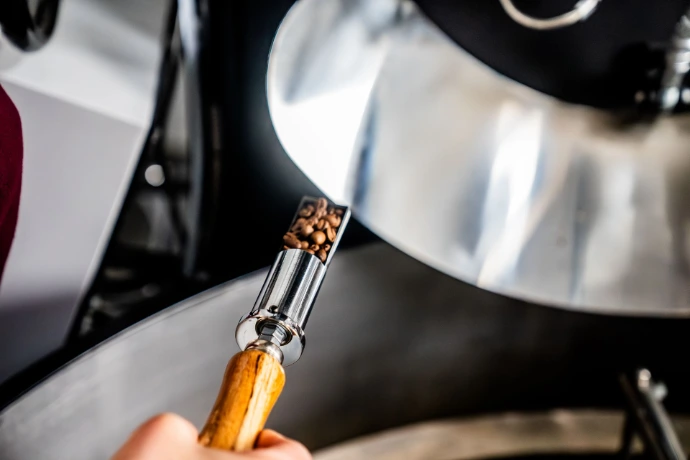
This artisanal approach allows us to honor each coffee, respecting its origin, character, and aromatic complexity. The wood fire does not transform the coffee; it gives it the time to express what it is. It does not add flavors; it creates the conditions for the coffee to develop its own, slowly.
Using wood, also raises the question of resources, their origin, and their management.It is a meaningful choice.
La torréfaction au feu de bois n’est pas un retour en arrière. C’est un choix de rythme, de chaleur et de présence. Une chaleur vivante, qui enveloppe le grain, demande de l’attention et laisse le café exprimer son caractère.
The fire does not promise a superior coffee — it offersa different relationship to taste, to the gesture and to the moment.
Une réflexion de l'arbre à la tasse, par cohérence
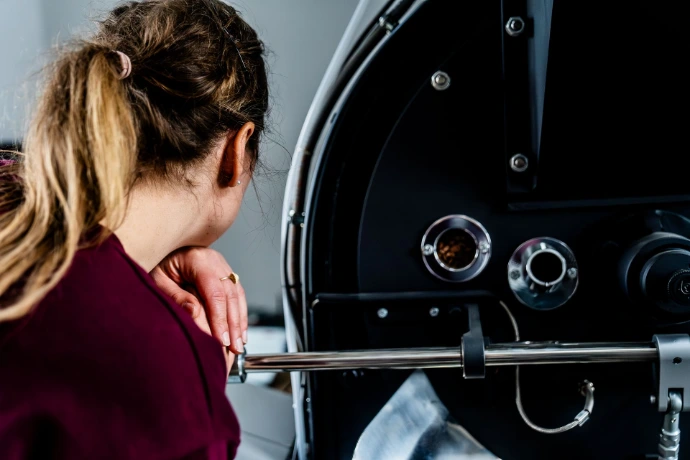
Chez WOODSTER COFFEE, le café ne commence pas dans la tasse, mais bien à l’origine, là où il pousse. Chaque choix — du producteur au transport, de la torréfaction aux usages quotidiens — s’inscrit dans une réflexion globale visant à respecter le vivant et à donner du sens à chaque étape. En privilégiant des partenaires engagés, des modes de transport plus responsables et une torréfaction ancrée dans des ressources locales et renouvelables, nous cherchons à construire une chaîne du café cohérente, consciente et durable, de l’arbre à la tasse. Cette approche globale guide également notre réflexion sur les déchets, le packaging et les usages, avec l’ambition de limiter notre impact tout en valorisant pleinement le café et ceux qui le font vivre.
1 - Specialty coffee
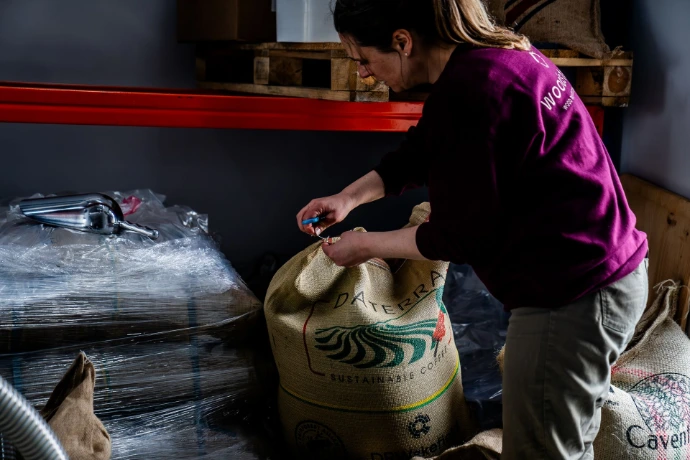
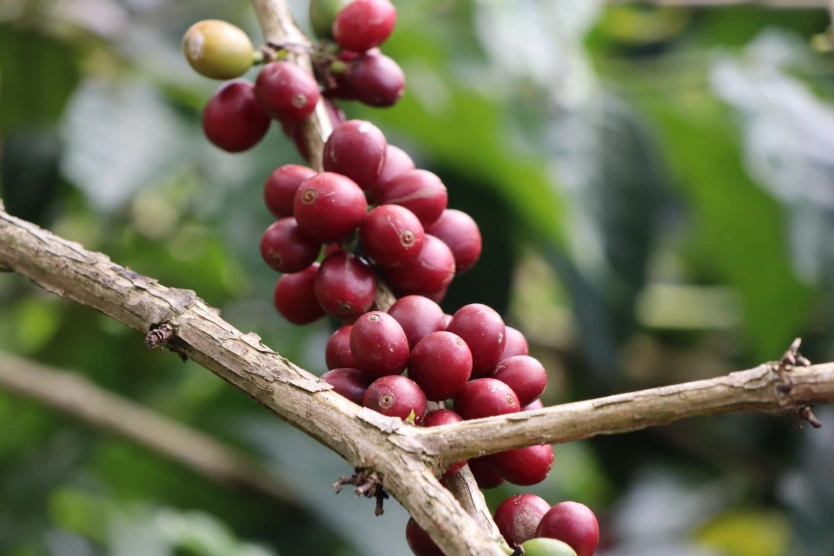
Specialty coffee is primarily based on a conviction beyond labels: that of producers committed to the pursuit of taste quality. This requirement naturally involves respect for ecosystems, as the aromatic richness of coffee directly depends on biodiversity and soil health. Far from the standardized bitterness of industrial coffee, specialty coffee — 100% Arabica — reveals a unique terroir and aromatic complexity.
While the majority of the world's coffee remains subject to market fluctuations, valuing these off-market coffees allows for fair compensation for producers. This fairer price gives them the opportunity to live dignified lives from their craft and to invest in sustainable agricultural practices.
Quality, traceability, and respect for life thus form a virtuous circle. Specialty coffee becomes much more than a product: it is a terroir coffee, responsible and deeply human.
2 - Sailing Transport
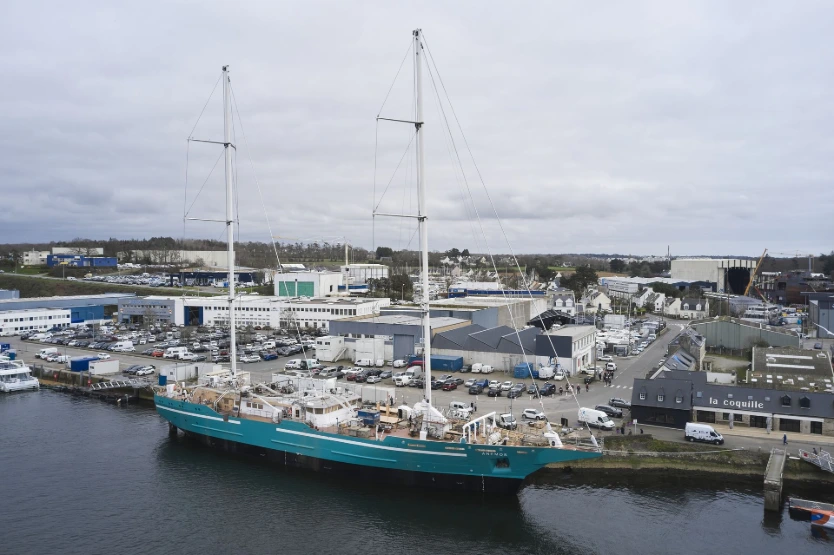
Sailing transport is much more than a logistical alternative: it is a decision aligned with a sustainable and responsible vision. By harnessing the natural power of the wind, this mode of transport drastically reduces CO₂ emissions compared to conventional cargo ships, fitting into an ambitious decarbonization trajectory for coffee imports to Europe. Unlike conventional maritime freight, sailing transport offers unparalleled traceability and transparency, with direct routes, ventilated holds, and conditions that preserve the quality of the beans. This approach also reduces the environmental impact of maritime transport, protects marine ecosystems, and anticipates future legislation on imported carbon.
With our partner Belco, who opened the first routes in 2025, we try as much as possible to prioritize coffee transported by sail.
3 - Wood-Fired Roasting
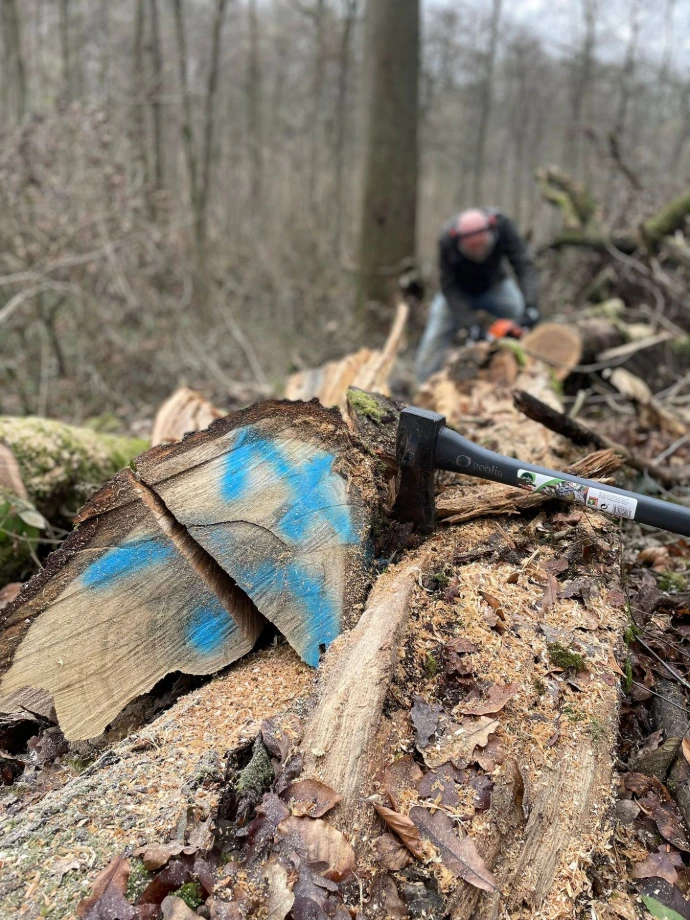
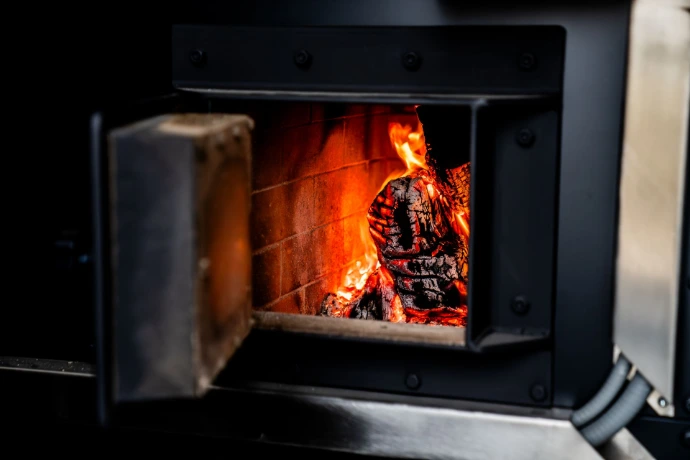
Wood-fired roasting not only influences the unique aromatic development of coffee but also allows for the use of a renewable and locally available resource. Most roasters use gas (fossil fuel) and increasingly electricity.
Our modern roaster is very energy-efficient: only two logs are enough to roast 25 kg of coffee.
We strive to contain our negative externalities both upstream and downstream. Thus, we value the waste from the micro-sawmill La Source, located a few kilometers from our roasting facility, as well as our own residues — silver particles and ashes — which we redistribute to the farmers at the farm to enrich their compost. This approach complements our sustainable initiative, combining energy performance, local reuse, and respect for the environment.
4 - Slow Coffee
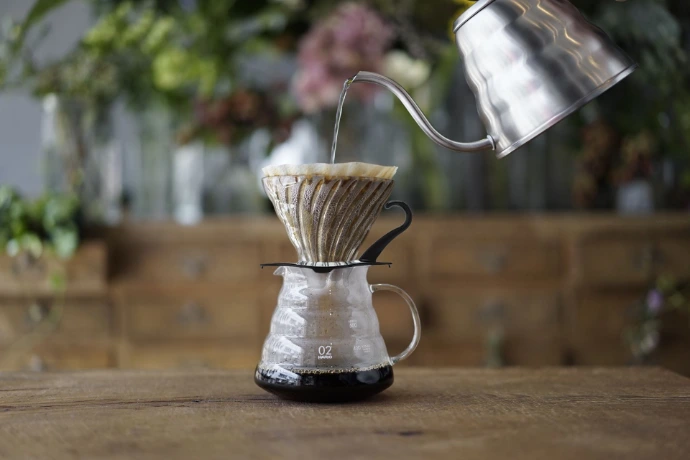
Slow coffee, or manual slow extraction, is much more than just a way to prepare coffee: it is also a minimalist and conscious approach. Unlike energy-hungry electric machines, slow coffee methods — whether using a filter, Chemex, or Aeropress — rely solely on human action and hot water, without any additional electricity consumption, significantly reducing the energy impact at home.
By favoring simple and easy-to-maintain manual equipment, we also limit the use of complex parts and the associated waste, while extending the lifespan of the equipment.
Woodster is committed to (re)introducing this way of making coffee for its sustainable approach but also for the taste quality it brings to each cup of coffee!